Yandina Community Gardens

41 Farrell street, Yandina

  • 41 Farrell St, Yandina
  • Blog
  • Contact Us
  • Getting Involved
    • Become A Member
    • BECOME VOLUNTEER
    • Newsletter Subscription
  • Login
  • My Account
    • Lost Password
  • 0 items
  • Events
    • Events Calendar
    • Events News
  • Workshops
  • Learning
    • Fact Sheets For Sale
    • Resources
    • Know Your Plants
    • SEASONAL PLANTING GUIDE
    • Recipes
  • Shop & Nursery
    • Plants For Sale
    • Other Items For Sale (only available in store)
    • Gift Voucher
  • Garden Tour
  • Garden Features
  • Venue Hire
  • Food Waste Loop
You are here: Home / Archives for country winemaking

Saturday, 5th December 2020, 9-11:30am, Making Country Wine, Cider and Vinegars

26/10/2020 By

Making Country Wine, Cider and Vinegar with Philip Richards

In this workshop you will learn general principles so that you can make any wine, as well as following particular recipes as examples.  You will see all the equipment and materials necessary (bottle, closures, locks fermentation vessels and more) and where possible inexpensive alternatives and I will detail sugar use and its measurement. We will also consider cider, ginger beer and more.  If you are currently using expensive cider vinegars, learn a simple method for making these products at home, along with fruit vinegars for preserving or for salad.

In this workshop Phillip will get you ready for making Summer drinks for quaffing.  Phillip’s advice is that Lemon Beer is tops, along with Parsley wine, so get planting now ready for a summer splash, and take advantage of Phillip’s free recipe for Hibiscus Delight, (a Yandina invention), a Turkish Delight rose tasting drink.  Great for summer sundowners, but make now for some winter cheer.


HIBISCUS DELIGHT           hibiscus
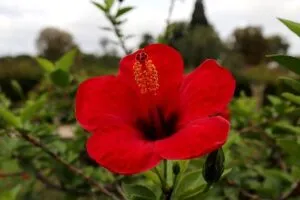
12-18 (more if you’ve got them) Good size flowers with stamens. Make sure you knock out all the little black beetles inside.

Put in bucket with 2 lemons grated and juiced or just roughly chopped. 1 kg sugar, 2 tbsp of white vinegar and 4.5 L water. Mix, cover, and leave 48 hours.

Bottle (recycle PET bottles), leave 1 month, check for excess gas by pressing the bottle’s shoulder or letting the cap off a little. It is necessary to check and relieve the pressure every couple of days.

Leave for another month. Taste. If too sweet leave another month.

Tickets are $35 for Non members and $25 for Members of Yandina Community Gardens, they are limited in number so please book here to avoid disappointment


About the Presenter:

Leaving his job as Headmaster of a boys boarding school in NSW, Phillip Richards took his family to carve out a farm on a 40 ha bush block of regrowth on sandy degraded granite outside Childers. Gaining organic certification (BFA) they sold vegetables through an organic produce agent in Brisbane as well as into the Sydney and Melbourne markets. Cows, pigs, goats all sorts of poultry helped increase the fertility and caused constant mayhem. They have been on the Sunshine Coast for many years and have 1.7 ha along the South Maroochy river and are self-sufficient in fruit and vegetables and have recently begun growing grains (maize, millet & sorghum) for both chook food and for our consumption.

Phillip writes for Grass Roots (in the past for Earth Garden) as well as G magazine, Owner Builder, and lately in PIP Journal (article on coffee) and Australasian Poultry (grains and sprouts for chooks). He was formally the organic editor for suite 101 a now defunct ezine.

Phillip Richards makes country wines, beers and ciders from fruit, vegetables and flowers. He says: I have some guiding principles and that is as far as possible to use what we grow and have in excess or to use cheap alternatives.



Filed Under: Recent Workshops Tagged With: cider, country winemaking, fruit wines, home making, philip richards, vinegar

Downloadable ebook – Country Wine Making by Phillip Richards

23/08/2019 By

‘Traditional country wines and beers; a bit of Christmas fizz

Strawberries, cherries and an angel’s kiss in spring

My summer wine is really made from all these things’

– Nancy Sinatra

Actually, I do not include a recipe for Nancy’s Summer Wine but I do describe in this small book just how you would go about doing it. More than individual recipes – of which there are plenty – this is about simple processes to make cheap and tasty wines. As well as wines I have included ‘long drinks’ such as cider, ginger beer, beer and more as well as a section on fruit vinegar. It is written from my own experience of making wines and long drinks (beers) from fruits, vegetables and flowers from our garden or found locally. Properly made, the wines are clear without sediment and usually very similar to a white wine with only a hint of the taste of the original stock. The organizing idea of the book is to give a clear and concise plan of the principles involved and to take you through step by step of the process. Here is all the information you will need to make your own wines with whatever you have and to make delicious thirst quenching summer drinks. Once the basic theory and practice is known it can then be applied to many different fruits, flowers and vegetables. While there are a number of recipes most of which employ similar processes, there are many, many more and many variants on the ones I have given. People have been making fermented drinks for a long time. This book is a simple ‘How To’ and an introduction. Making such country wines is a well-established tradition. Some centuries ago housewives would, as a matter of course, put up wines and beers.

One reason for homemade wines and beers is to save expense. To make savings the ingredients need to be inexpensive. For this reason most of the wines I suggest are made from or use cheap and easily available materials. Often the household wine we make is made from fruit or vegetables that we have in excess or from parts otherwise not used such as the flesh of coffee, the pods of broad beans. The main expense is getting set up with the equipment; however this can be much reduced by a little judicious substitution. There are also a number of products that can be added to wine to improve it. I discuss these but with many I add a cheap alternative or the comment: isn’t really necessary. Hobbyists, and you, if you get the bug, might spend more on ingredients.

To get your copy now, click here

Filed Under: e-Book Tagged With: country winemaking, e-book

Our Location & Hours

41 Farrell street, Yandina, see map
Open to Public Tues, Thur and Sat 8.30am-12pm. Closed public holidays. (Updated 16 Oct 2025)

Workshops

  • Saturday 15 Nov - Splitting a Native Beehive

    Saturday 15 Nov – Splitting a Native Beehive

    Read more
  • Saturday 6 Dec - What is Permaculture?

    Saturday 6 Dec – What is Permaculture?

    Read more

Categories

  • Bees (5)
  • Chickens (1)
  • Competitions (2)
  • Composting (3)
  • e-Book (1)
  • Event (11)
  • Events (11)
  • Fact Sheet (4)
  • Featured (1)
  • Filled Job Positions (1)
  • Food Waste Loop (4)
  • Garden Tours (2)
  • Giving Plastic The Flick (2)
  • Kids Event (1)
  • Know Your Plants (70)
  • Nursery Plants (49)
  • Organisation (13)
  • Other (4)
  • Permaculture Method (7)
  • Recent Events (11)
  • Recent Workshops (51)
  • Recipes (33)
  • Sustainable Living (15)
  • Vacancies (2)
  • Venue Hire (1)
  • Volunteers (5)
  • Workshops (50)
  • YCG History (2)

Tags

biochar chop & drop compost composting Edible Greens edible leaves edible seeds edible tubers Event food waste food waste loop ground cover insect attracting Kids event Kids program know your plants Learning Living sustainably Management Committee medicinal plants medicine member event Morag Gamble native stingless bees Nutrient Dense Food Open garden visit Permaculture Plant plants Recipe Recipes Subtropical Greens Support plants Sustainable Building sustainable living Tropical greens volunteer water plant Wax-wrap making wax-wraps Workshop workshops Worm Farming Yandina Community Garden Yandina community Gardens

Permaculture People

Elizabeth Fekonia - Permaculture Real Food
Anne Gibson - The Micro Gardener
Morag Gamble - Our Permaculture Life
Dee Humphreys - Eatin Garden Edible Garden Tours

Acknowledgement of country

Yandina Community Gardens acknowledges and pays respect to the Traditional Owners of the land, the Gubbi Gubbi (Kabi Kabi) people, past and present and emerging. We recognise and wish to learn from their spiritual and cultural connection to the land.

Copyright © 2026 · Outreach Pro On Genesis Framework · WordPress · Log in