Yandina Community Gardens
On the days that the Gardens are open it is buzzing with activity. Below are some photos of our volunteers in action.


41 Farrell street, Yandina
By
Yandina Community Gardens
On the days that the Gardens are open it is buzzing with activity. Below are some photos of our volunteers in action.
By
‘Traditional country wines and beers; a bit of Christmas fizz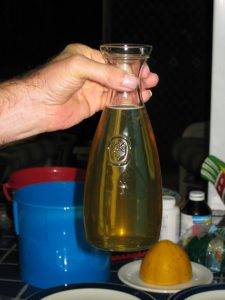
Strawberries, cherries and an angel’s kiss in spring
My summer wine is really made from all these things’
Nancy Sinatra
Actually, I do not include a recipe for Nancy’s Summer Wine but I will describe in this workshop just how you would go about making it. More than individual recipes it will be about demonstrating simple processes to make cheap and tasty wines. As well as wines, we will consider ‘long drinks’ such as cider, ginger beer, and lemon beer and a method of turning wines into fruit vinegars. Making country wines is a very old tradition – you may recall the vet’s experience with parsnip wine in ‘All Things Great and Small’. The wines and drinks I make are from fruit, vegetables, and flowers from our garden or that are found locally. We use what is in excess or what might otherwise, be discarded – guava pulp for example. I can demonstrate the use of the hydrometer and the arithmetic of sugar – bring your pocket calculator if you wish. We will go through the gear needed, sample recipes and additions that make good wine. This may lead to consideration of what to plant to supply stock. I shall make some simple cider (bring a two-litre plastic bottle of cheap apple juice – not from the refrigerator section but from the shelves in the supermarket – preservative free) and we will turn it into cider.
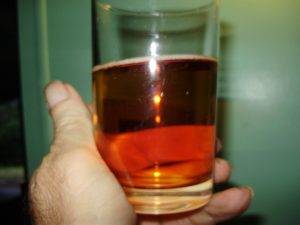 For summer quaffing I shall explain and demonstrate how to make beers – lemon beer and hibiscus delight (a Yandina speciality). After the workshop participants will have a good grasp of the fundamental processes of Traditional Country Winemaking, and a knowledge of the equipment and ingredients needed (as well as cheap substitutes) that they will be able to apply this to a variety of material.
Click here to book for this winemaking workshop
About The Presenter
Leaving his job as Headmaster of a boys boarding school in NSW, Phillip Richards took his family to carve out a farm on a 40 ha bush block of regrowth on sandy degraded granite outside Childers. Gaining organic certification (BFA) they sold vegetables through an organic produce agent in Brisbane as well as into the Sydney and Melbourne markets. Cows, pigs, goats all sorts of poultry helped increase the fertility and caused constant mayhem. They have been on the Sunshine Coast for many years and have 1.7 ha along the South Maroochy river and are self-sufficient in fruit and vegetables and have recently begun growing grains (maize, millet & sorghum) for both chook food and for our consumption.
Phillip writes for Grass Roots (in the past for Earth Garden) as well as G magazine, Owner Builder, and lately in PIP Journal (article on coffee) and Australasian Poultry (grains and sprouts for chooks). He was formally the organic editor for suite 101 a now defunct ezine.
By
 This week you will go on a journey as you learn about coil weaving. You will learn how to begin consistently and how to add new fibre into your baskets, how to finish neatly and all about the importance of tension. You will also learn about how to bring up sides on a basket and how you can keep tension consistent by using an aid such as a metal or plastic or wooden bowl about the size and shape that you want your basket to become. Please bring something like this as a weaving aid as it will prevent you from making your basket too
  small. Also please bring , a wide-eyed blunt needle. This is a good time to collect materials from the garden; if it looks interesting or you’re curious about its use, bring it along.
Indigo has been learning all about weaving with natural fibres from various indigenous communities around Australia. She gives back to First Nations people whenever the opportunity arises , and has waited a long time for blessings to run weaving workshops here on the Sunshine Coast. Indigo is passionate about connecting people together through weaving, and connecting all people to the country in a respectful way. She uses both traditional fibre, but also she uses many things that may grow in your garden as well, helping our native environment by weaving with thing like cats claw.
To book for this workshop click here
Please note that this is a hands-on workshop and is longer than the usual workshop timing, as there is so much for you to learn and practice
By
Yandina Community Garden Members are invited by Permaculture Noosa to attend a stunning Open Garden at the Traveston property of Mel Hobbins
OPEN TO THE GENERAL PUBLIC ….. SO BRING YOUR FAMILY AND FRIENDS ALONG!
Come to see for yourself how Mel has achieved a SUPER PRODUCTIVE food garden.
When: Sunday 23rd June 2019
Time: 1-3pm
Entry: $5 YCG Members and general public, ($2 Permaculture Noosa Members)
Where: 1869 Noosa Road, Traveston (near Cooran)
Directions: Travelling from Cooran on the Traveston Road, turn right at the Traveston Village sign into Howe Road, (which passes under the railway line). At the junction with Noosa Road, turn Left…. It is the second property, third driveway on the right.
Please carpool as there is NO on road parking (all parking on site)
Bring: A plate to share if you can, or just join us
Host: Mel Hobbins
Any questions call Dee Humphreys (Open Garden Coordinator) 0497754486


This Open Garden will feature many of the Cool Season Veggies and “successional sowing” covered in Mel’s presentation at the Permaculture Noosa Club Night in February.
Mel and Estelle moved to this 30 acre property 13 years ago, (when Mel had just arrived from the UK).
The Orchard and Veggie areas occupy approximately 4 acres and the hardwood plantation and rainforest plantings a further 6 acres. More than 3 000 trees have been planted so far. The remainder/bulk of the property is given over to grazing for Estelle’s horses.
A wide range of cool season and tropical veggies are grown in both traditional beds and food forest type plantings.
The wide variety of fruit and nut trees now number well over 120 and include citrus that were budded at Mel’s grafting workshop in 2016. There will be many of the 30 plus citrus varieties available for tasting.
The huge amount of mulch required is produced on site comprising hay collected from paddocks or from the extensive plantings of East Indian Lemongrass, grown specifically for this purpose.
Composting and general soil improvement are an ongoing activity on the property.
The land was originally part of a 200 acre Grazing and Fruit Farm which was sub-divided some 30 years ago and overlooks Woondum National Park and is in the upper catchment of Dingo Creek, which is part of the Six Mile/Mary River system.
With the seasonal creeks currently flowing, a walk, after the main tour, through Mel’s developing Rainforest would be a magical experience.
After the tour, join us for tea, coffee and shared delights. Take this opportunity to enjoy the surrounds, ask more questions and socialise with newfound friends.
DON’T MISS THIS WONDERFUL OPPORTUNITY TO LEARN FROM MEL!
By
Common Name: St Robert, Storkbill, Cranesbill, Red Robin, Fox geranium, St Robert’s Wort, Bloodwort, Felonwort, Dragon’s Blood, Herb Robert
Plant: All year round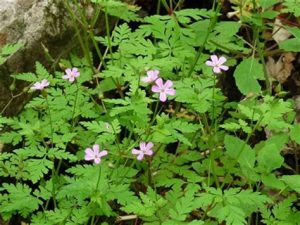
Harvest: All year round
Propagation: Propagation by seed
It is believed the herb was probably named after the 11th Century French Saint, Robert Abbot of Molerne, whose medical skills were legendary. Dies off in Summer to return in Winter (Sub-tropics). Annual 30-40cm, red stems and branches in many directions with green leaves 6cm length, both covered with tiny hairs. Dainty, bright-pink flowers with 5 rounded petals, each with a streak of white. Seeds self-disperse as mother plant dies. Plants enjoy shady, damp places especially stone paths. Has been observed to have an affinity with other plants and is not bothered by pests.
“If bothered by mosquitos when working in the garden, crush a few Herb Robert leaves and rub them on arms and legs.” (Isabell Shipard)
There are MANY health benefits attributed to Herb Robert and it makes a wonderful herbal tea.