Yandina Community Gardens

41 Farrell street, Yandina

  • 41 Farrell St, Yandina
  • Getting Involved
    • Join
    • Volunteer
    • Contact Us
  • My Account
    • Login
    • Lost Password
  • 0 items
  • Workshops & Events
    • YCG Blitz 2026 dates
    • Workshops
    • Events News
  • Learning
    • Fact Sheets For Sale
    • Resources
    • Know Your Plants
    • SEASONAL PLANTING GUIDE
    • Recipes
  • Shop & Nursery
    • Plants For Sale
    • Other Items For Sale (only available in store)
    • Gift Voucher
  • Garden Features
  • Venue Hire
You are here: Home / Archives for Know Your Plants

Brazilian Spinach (Althernanthera sissoo)

14/12/2021 By

Small herbaceous plant with small white flowers. Very hardy.brazilian spinach

Other Names: South American Crinkle Salad, Poor Man’s Spinach

Origin: South American Highlands

Size: 0.3m high, 0.5m spread

Growing conditions: partial sun to shade

Harvest: any time through the growing season

Propagation: best from soft cuttings in spring

Growing tips: Brazilian Spinach can be planted as a solid border or left to ramble on its many branches to cover an area up to a metre wide.  Cuttings can be taken during the wet season and either planted out or placed in a jar with water to encourage root growth prior to planting.  Tiny white flowers will form at the end of the season (winter), and the succulent leaves will turn a bit papery and bitter; however, they can still be eaten cooked at this stage.

Use: Brazilian spinach is a prolific source of greens in the garden; it can be used in salads with other greens; it can be used as a spinach substitute – try it in combination with Tahitian spinach and arrowroot leaves to make a spinach and feta pie; the leaves can also be substituted for basil when making pesto.

Availability in shop:  All year round.

Suggested Recipes: Brazilian Spinach with Macadamia Nut Pesto;  Spinach, Fetta & Ricotta Pie

Filed Under: Know Your Plants, Nursery Plants Tagged With: Brazilian Spinach, Edible Greens, Permaculture, Subtropical Greens

Aibika (Abelmoschus manihot)

14/12/2021 By

Aibika (Web)Hardy, short-lived perennial shrub with large yellow flowers. Leaves and flowers can be eaten raw or cooked.

Other Names: Queensland Greens, Slipper Cabbage, Hibiscus Spinach

Origin: tropical Asia

Size: 2-3m high, 1.5m spread

Growing conditions: full sun

Harvest: Jan – May

Propagation: Take 30 cm woody cuttings in spring & summer. Plant straight into rich soil, or establish in pots.

Growing tips:  Aibika benefits from pruning at the beginning of each growing season to make the plant bush out.  It is a hardy plant and prefers a sunny aspect with rich, moist, well- drained soil and protection from frosts.

The two main types grown on the Sunshine Coast have either finger-like leaves or a tri-lobe form. Aibikas are heavy feeders, so, to ensure constant leaf production, regular fertilising during the growing season is essential. Grasshoppers are very fond of aibika, so a good deterrent is to interplant aibika with perennial bush basil.

Aibika is very attractive planted in groups or as a hedge in the garden, where it provides a cool microclimate under its large leaves. Consider growing a ground cover of peanuts under (for nitrogen fixing), with a tomato or bean growing up the aibika’s trunk and you have a productive nitrogen-fixing guild with food on the way.

Use: Pick young leaves and add in the last 5-10 minutes of cooking, or use the leaves sparingly in a salad as they contain mucilage and can make your finished dish quite slimy if too many are added.  Older leaves will definitely need to be cooked to remove the mucilage. Large leaves can be used as wraps and to make dolmades.  The flowers are also edible and can be eaten either raw or cooked. Aibika is very nutritious, with plenty of protein, vitamins and minerals, including iron.

Availability in shop:  Most times during summer.


Filed Under: Know Your Plants, Nursery Plants Tagged With: Aibika, Edible Greens, Permaculture, Subtropical Greens

Wild Mint (Native River Mint, Wild Mint or Poang-gurk)

16/01/2020 By

Mentha Australis (Native River Mint – aka Wild Mint)
Aboriginal name: Poang-gurk
Where will you find it: Widespread throughout Australia, particularly in inland areas. Usually found near rivers and creeks
Plant Type: Ground cover, clumping perennial
Preferred Climate: Sub-tropical, warm temperate (Summer growing)
Mentha Australis is a smaller, more delicate relative of the well-known mints peppermint and spearmint. This species of mint grows about 30cm high and 100cm wide, but can expand much further if allowed to run wild. Propagation is easy from cuttings and seeds can be slow to germinate. To harvest, pluck the leaves off the growing plant or prune whole stalks at a time. Like other mints, it grows relatively fast and will need regular pruning to keep tidy.
Leaves may be used fresh, or chopped and dried for later use. Just remember the aroma and flavour in harvested leaves will fade over time. It has long been used in Aboriginal culture as a flavoursome bushfood, insect repellent and medicinal herb. Can also be used to make an interesting mint tea, which is reputedly good for easing the effects of colds.

Filed Under: Know Your Plants Tagged With: know your plants

Yarrow

22/07/2019 By

Yarrow Achillea millefolium

Common Name: Soldiers Woundwort, Staunch Blood, Carpenter’s Woundwort, Knight’s Milfoil, Nosebleed, Bloodwort, Old Man’s Pepper, Noble Yarrow, Thousand Leaf, Thousand Seal, Old Man’s Pepper, Devil’s Nettle

Origin: Native to the northern hemisphere

Propagation: Root division or seed

A perennial, ground spreading herb with fragrant fern-like leaves 5-20cm long. Flower stems (white) are 30-60cm in length, often used in dried floral arrangements.

Yarrow will grow in sun or part shade and spreads easily in rich, loose soil. It seems to have a beneficial impact on other herbs and plants nearby as well as attracting beneficial insects, including ladybirds and predatory wasps. Yarrow also has insect repelling properties and can be used with other herbs as a spray on plants. It is also a great addition to your compost heap, working as an ‘activator’ of the composting process.

Prune after flowering.

Fresh yarrow leaves have a peppery taste and can be finely chopped and a little-used in salads, cheese dips or as a garnish. Leaves can even be steamed as used like spinach. Dried leaves, when powdered, add a pepper-like flavouring to your meals.

Filed Under: Know Your Plants Tagged With: know your plants, Plant, plants

Herb Robert (Geranium Robertianum)

16/06/2019 By

Common Name: St Robert, Storkbill, Cranesbill, Red Robin, Fox geranium, St Robert’s Wort, Bloodwort, Felonwort, Dragon’s Blood, Herb Robert

Plant: All year roundHerb-Robert

Harvest: All year round

Propagation: Propagation by seed

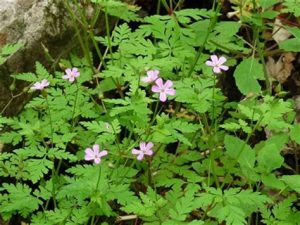
It is believed the herb was probably named after the 11th Century French Saint, Robert Abbot of Molerne, whose medical skills were legendary. Dies off in Summer to return in Winter (Sub-tropics). Annual 30-40cm, red stems and branches in many directions with green leaves 6cm length, both covered with tiny hairs. Dainty, bright-pink flowers with 5 rounded petals, each with a streak of white. Seeds self-disperse as mother plant dies. Plants enjoy shady, damp places especially stone paths. Has been observed to have an affinity with other plants and is not bothered by pests.

“If bothered by mosquitos when working in the garden, crush a few Herb Robert leaves and rub them on arms and legs.” (Isabell Shipard)

There are MANY health benefits attributed to Herb Robert and it makes a wonderful herbal tea.

Filed Under: Know Your Plants Tagged With: know your plants, nursery plants, Plant, plants

  • « Previous Page
  • 1
  • …
  • 5
  • 6
  • 7
  • 8
  • 9
  • …
  • 14
  • Next Page »

Our Location & Hours

41 Farrell street, Yandina, see map
Open to Public Tuesdays and Saturdays 8.30am-12pm. Closed public holidays. (Updated 19 February 2026)

Workshops

  • Sat February 28 2026 - How To Grow Dragon Fruit

    Sat February 28 2026 – How To Grow Dragon Fruit

    Read more
  • Saturday 14 Feb - What is Permaculture?

    Saturday 14 Feb – What is Permaculture?

    Read more

Categories

  • Bees (5)
  • Chickens (1)
  • Competitions (2)
  • Composting (3)
  • e-Book (1)
  • Event (11)
  • Events (11)
  • Fact Sheet (4)
  • Featured (1)
  • Filled Job Positions (1)
  • Food Waste Loop (4)
  • Garden Tours (2)
  • Giving Plastic The Flick (2)
  • Kids Event (1)
  • Know Your Plants (70)
  • Nursery Plants (49)
  • Organisation (13)
  • Other (4)
  • Permaculture Method (7)
  • Recent Events (11)
  • Recent Workshops (51)
  • Recipes (33)
  • Sustainable Living (15)
  • Vacancies (2)
  • Venue Hire (1)
  • Volunteers (5)
  • Workshops (50)
  • YCG History (2)

Tags

biochar chop & drop compost composting Edible Greens edible leaves edible seeds edible tubers Event food waste food waste loop ground cover insect attracting Kids event Kids program know your plants Learning Living sustainably Management Committee medicinal plants medicine member event Morag Gamble native stingless bees Nutrient Dense Food Open garden visit Permaculture Plant plants Recipe Recipes Subtropical Greens Support plants Sustainable Building sustainable living Tropical greens volunteer water plant Wax-wrap making wax-wraps Workshop workshops Worm Farming Yandina Community Garden Yandina community Gardens

Permaculture People

Elizabeth Fekonia - Permaculture Real Food
Anne Gibson - The Micro Gardener
Morag Gamble - Our Permaculture Life
Dee Humphreys - Eatin Garden Edible Garden Tours

Acknowledgement of country

Yandina Community Gardens acknowledges and pays respect to the Traditional Owners of the land, the Gubbi Gubbi (Kabi Kabi) people, past and present and emerging. We recognise and wish to learn from their spiritual and cultural connection to the land.

Copyright © 2026 · Outreach Pro On Genesis Framework · WordPress · Log in