Yandina Community Gardens

41 Farrell street, Yandina

  • 41 Farrell St, Yandina
  • Getting Involved
    • Join
    • Volunteer
    • Contact Us
  • My Account
    • Login
    • Lost Password
  • 0 items
  • Workshops & Events
    • YCG Blitz 2026 dates
    • Workshops
    • Events News
  • Learning
    • Fact Sheets For Sale
    • Resources
    • Know Your Plants
    • SEASONAL PLANTING GUIDE
    • Recipes
  • Shop & Nursery
    • Plants For Sale
    • Other Items For Sale (only available in store)
    • Gift Voucher
  • Garden Features
  • Venue Hire
You are here: Home / Archives for Permaculture

Arrowroot

23/11/2017 By

Arrowroot

Arrowroot (Web)Canna edulis

Origin: Hot, humid Queensland

Plant: Any time

Harvest: 12-18 months for edible rhizomes.

Suggested Recipes: Root Vegetable Curry, Vegetable Pikelets

Use as a ‘chop n drop’ mulch, or leave to form a weed barrier with pigeon pea, lemon grass and comfrey. Good bulk food to grow for livestock.  Arrowroot can be

Arrowroot Rhizome with 'Eyes'
Arrowroot Rhizome with ‘Eyes’

planted to provide a windbreak or shade for more delicate vegies.  They will grow almost anywhere, in any type of soil and with minimal water requirements.  Propagation is simply planting a piece of the rhizome that has an ‘eye’. This eye will become your new plant. Keep arrowroot for eating separate from that grown for ‘chop n drop’ as it needs to be grown over a longer period – at least twelve months old – to develop the tubers; it is best harvested when still young and before the fibre develops. The tubers can be cooked (add lemon juice to cooking water to prevent oxidisation) and grated then added to stews/casseroles as a thickener; tubers can be roasted or sliced thinly and cooked as chips (use a bit of garlic in the oil as well). The starch can be extracted and used to make arrowroot biscuits.

Filed Under: Know Your Plants Tagged With: Arrowroot, edible rhizomes, Permaculture, plants

Arrowhead

23/11/2017 By

Arrowhead

Arrowhead (Web)Sagittaria sagittifolia  syn. Sagittaria sinensis

Origin: South, Central and North America

Plant: Early Spring

Harvest: When leaves turn yellow and die back.

Arrowhead is a water plant, tubers are planted approx. 4-5 cm deep and spaced about 10 cm apart in soil in either a pond or tub, then covered with water 10-30 cm deep. Arrowhead is an easy to grow plant with no special growing requirements other than maintaining a cover of shallow water over the soil.  It is very hardy plant, grows to 30 cm high and likes full sun.

The arrowhead-tuber flesh is cream coloured and can be eaten boiled, baked or fried, however, it should not be eaten raw. Simply boil tubers until tender, slice thinly and serve tossed in butter or sesame oil; alternatively, the cooked and cold tubers can be grated or sliced into a salad. The young shoots can also be eaten.

Filed Under: Know Your Plants Tagged With: Arrowhead, Permaculture, plants, water plant

Amaranth

23/11/2017 By

Amaranth (aka duck potato, swan potato, katniss)

Amaranth (Web)Amaranthus species

Origin: central Latin America and the Himalayas

Plant: Sept – Jan

Harvest: as required

Amaranth is a seed – not a grain – that self-seeds readily. It is an upright, moderately tall, broad leafed, annual plant. There are a number of different species of amaranth and a huge number of varieties within those species.

Amaranth comes in all sizes, shapes and colours. The leaves can be round or lance shaped, 5cm to more than 15cm long, light green, dark green, reddish or variegated. Seeds may be white, yellow, pink or black. This is an attractive garden show-piece and its colourful tassels come in burgundy, red, yellow, gold and purple.

Amaranth is related to the common weed, pigweed, and is rich in lysine, calcium, iron and carotene. Harvest leaf amaranth as required and definitely before it flowers (the buds are edible though). Pick young leaves for salads and stir fries. Older leaves need to be cooked first to remove the oxalic acid.   Amaranth leaves can be used in exactly the same way as spinach. Young stems can also be used as well. The grains can be ground in a mill to make amaranth flour and then mixed with water to a dough-like consistency – the dough is then flattened and toasted to make a flatbread or pita bread.

Filed Under: Know Your Plants Tagged With: Amaranth, ancient grain, Permaculture, plants

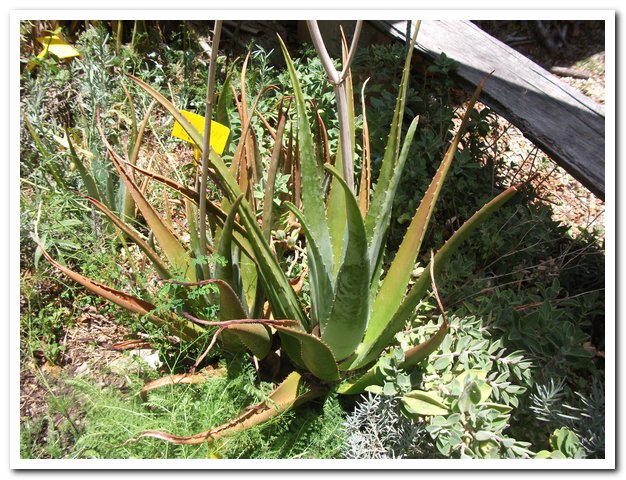
Aloe Vera

23/11/2017 By

Aloe Vera (aka Medicine Plant, Burn Plant, Living First-Aid Plant)

Aloe Vera (Web)Aloe vera barbadensis

Origin: North Africa

Plant: Spring and Summer,

Harvest:  all year round for medicinal use

Propagate: whenever pups or suckers need thinning out at base of plant.

The thick, succulent leaves can grow from 30-80cm long and 2-10cm wide at the base.

This perennial plant grows to approximately 60cm.  It has narrow, upwardly curving succulent leaves which are a green to grey-green colour with small spikes along their edges (leaf margins). Aloe vera can be planted in full sun in the garden or grown as a pot or hanging basket specimen. Aloe vera love the heat and hate cold, wet and frosts.   Flowers are bright yellow at maturity – (A. perryi’s flowers are an orange/apricot shade).

Aloe vera is a succulent which has many medicinal uses, as well as being used in skin care products. The soothing aloe gel contained in the leaves is ideal for taking the sting out of sunburn, stopping the itch from mosquito bites and for moisturising the skin.


Filed Under: Know Your Plants Tagged With: Aloe Vera, medicinal plants, Permaculture, plants

Yandina Garden Tour

08/10/2017 By

Want to know what and how to grow in the sub-tropics? Join Dee Humphreys for a tour of YCG. See Permaculture principles and design ideas in action.

Meet at bamboo tepee. 1-1.5 hrs.
We recommend you wear a hat and bring a water bottle.
Cost: Gold coin to contribute to the overall running costs of the Gardens.

Dee Humphreys is an organic gardener and educator. Her enthusiasm for eating what she grows and using all things ‘green’ for health is infectious. Dee and her husband, Ian, previously ran the ‘Garden of Eatin’, a magical 10 acres of edible gardens on the Sunshine Coast where they taught people through educational Garden Tours. More recently they have created a super productive suburban garden. Dee has a special passion for nutritious herbs and weeds, and exploring their practical uses. A wealth of knowledge!

FYI – Dee Humphreys will also be our Garden Tour Guide on 2 December.

Filed Under: Garden Tours Tagged With: Community Garden, Garden Tour, Growing in the sub-tropics, Permaculture

  • « Previous Page
  • 1
  • …
  • 9
  • 10
  • 11
  • 12
  • Next Page »

Our Location & Hours

41 Farrell street, Yandina, see map
Open to Public Tuesdays and Saturdays 8.30am-12pm. Closed public holidays. (Updated 19 February 2026)

Workshops

  • Sat February 28 2026 - How To Grow Dragon Fruit

    Sat February 28 2026 – How To Grow Dragon Fruit

    Read more
  • Saturday 14 Feb - What is Permaculture?

    Saturday 14 Feb – What is Permaculture?

    Read more

Categories

  • Bees (5)
  • Chickens (1)
  • Competitions (2)
  • Composting (3)
  • e-Book (1)
  • Event (11)
  • Events (11)
  • Fact Sheet (4)
  • Featured (1)
  • Filled Job Positions (1)
  • Food Waste Loop (4)
  • Garden Tours (2)
  • Giving Plastic The Flick (2)
  • Kids Event (1)
  • Know Your Plants (70)
  • Nursery Plants (49)
  • Organisation (13)
  • Other (4)
  • Permaculture Method (7)
  • Recent Events (11)
  • Recent Workshops (51)
  • Recipes (33)
  • Sustainable Living (15)
  • Vacancies (2)
  • Venue Hire (1)
  • Volunteers (5)
  • Workshops (50)
  • YCG History (2)

Tags

biochar chop & drop compost composting Edible Greens edible leaves edible seeds edible tubers Event food waste food waste loop ground cover insect attracting Kids event Kids program know your plants Learning Living sustainably Management Committee medicinal plants medicine member event Morag Gamble native stingless bees Nutrient Dense Food Open garden visit Permaculture Plant plants Recipe Recipes Subtropical Greens Support plants Sustainable Building sustainable living Tropical greens volunteer water plant Wax-wrap making wax-wraps Workshop workshops Worm Farming Yandina Community Garden Yandina community Gardens

Permaculture People

Elizabeth Fekonia - Permaculture Real Food
Anne Gibson - The Micro Gardener
Morag Gamble - Our Permaculture Life
Dee Humphreys - Eatin Garden Edible Garden Tours

Acknowledgement of country

Yandina Community Gardens acknowledges and pays respect to the Traditional Owners of the land, the Gubbi Gubbi (Kabi Kabi) people, past and present and emerging. We recognise and wish to learn from their spiritual and cultural connection to the land.

Copyright © 2026 · Outreach Pro On Genesis Framework · WordPress · Log in