Yandina Community Gardens

41 Farrell street, Yandina

  • 41 Farrell St, Yandina
  • Getting Involved
    • Join Membership!
    • Become a Volunteer
    • Contact Us
  • My Account
    • Login
    • Lost Password
  • 0 items
  • Events
    • YCG Blitz 2026 dates
    • Events News
  • Workshops & Events
  • Learning
    • Fact Sheets For Sale
    • Resources
    • Know Your Plants
    • SEASONAL PLANTING GUIDE
    • Recipes
  • Shop & Nursery
    • Plants For Sale
    • Other Items For Sale (only available in store)
    • Gift Voucher
  • Garden Tour
  • Garden Features
  • Venue Hire
  • Food Waste Loop
You are here: Home / Archives for water plant

Vietnamese Mint (Persicaria odorata)

07/01/2022 By

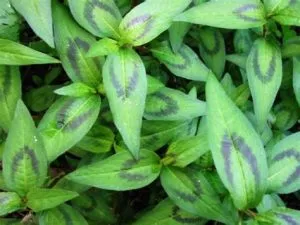
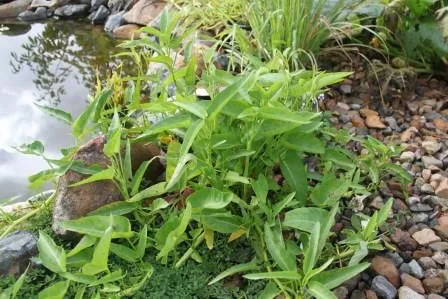
Perennial, spreading plant with small pink flowers.

Other Names: Rau Rau, Rau Ram, Vietnamese Coriander, Lemon Coriander, Daun Laksa

Origin: Asia

Size: 0.5m high, 1m spread

Growing conditions: partial shade to full shade

Harvest: Prune/harvest regularly to encourage bushy growth.

Propagation: root division or cuttings, which easily root in water

Growing tips:  Grow in very damp areas, or place pot in water.

Use: Leaves have a hot, pungent, biting flavour and small amounts are great in salads, soups, stews, stir-fries, casseroles, meat and noodle dishes.

Availability in shop: all year
Filed Under: Know Your Plants, Nursery Plants Tagged With: plants, Vietnamese Mint, water plant

Kang Kong (Ipomoea aquatica)

28/12/2021 By

Low-growing rambler for very damp areas or place pot in water.Kang Kong (Web)

Other Names: Water spinach, Swamp cabbage

Origin: hot, humid tropics of SE Asia

Size: 0.3m high, 1m spread

Growing conditions: full sun to partial shade

Harvest: During summer-autumn in the sub-tropics, all year in tropics. Harvest often before the plant reaches 20cm high to encourage bushy growth.

Propagation: from soft cuttings

Growing tips:  Grow in very damp areas, or place pot in water.

Use: Leaves and vine tips are a staple green in Asia. Great in stir-fries other Asian dishes.

Availability in shop: summer to autumn


Filed Under: Know Your Plants, Nursery Plants Tagged With: edible leaves, Kang Kong, Permaculture, plants, Tropical greens, water plant

Taro (Colocasia esculenta)

23/11/2017 By

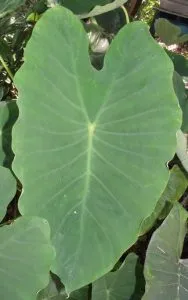
Clumping perennial with large tubers and green or purple stems. Note the cut in the leaves does not go through to the stem.

Other Names: Talo, Dalo, Dago

Origin: South-East Asia

Size: 1.5m high, 1.5m spread

Growing conditions: partial shade to full shade

Propagation: Separate pups from main plant.

Growing tips: Grows well in boggy or partially submerged conditions.

Use: Harvest in winter, when the leaves begin to look tatty. The corm is harvested 8-10 months after planting. Starchy corms are a good source of calcium and iron.  Wash the taro after harvesting and allow to dry.  Harvested taro corms can be stored in a dry airy place for 2 – 3 weeks at most. After this time they will rot.  Roast or cook whole to preserve nutrients. Poi is a lactic ferment made from boiled taro corms. The leaves can be picked 2-4 weeks after planting and take about 6 weeks to mature. They can be boiled, pulverised in a blender then added to soups, casseroles and stir-fries. They are traditionally used as food wraps and cooked in a mumu or cooking pit. Young leaves will take 5-10 minutes to cook while older ones 15-20 minutes before the oxalate crystals have been rendered neutral. Can be frozen.

Availability in shop: all year

Recipes: Taro Fries with Coriander Pesto

Filed Under: Know Your Plants, Nursery Plants Tagged With: edible corm, Permaculture, Taro, water plant

Arrowhead

23/11/2017 By

Arrowhead

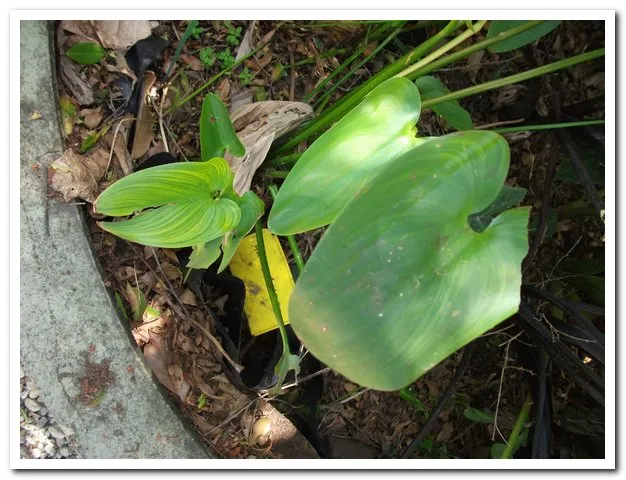
Arrowhead (Web)Sagittaria sagittifolia  syn. Sagittaria sinensis

Origin: South, Central and North America

Plant: Early Spring

Harvest: When leaves turn yellow and die back.

Arrowhead is a water plant, tubers are planted approx. 4-5 cm deep and spaced about 10 cm apart in soil in either a pond or tub, then covered with water 10-30 cm deep. Arrowhead is an easy to grow plant with no special growing requirements other than maintaining a cover of shallow water over the soil.  It is very hardy plant, grows to 30 cm high and likes full sun.

The arrowhead-tuber flesh is cream coloured and can be eaten boiled, baked or fried, however, it should not be eaten raw. Simply boil tubers until tender, slice thinly and serve tossed in butter or sesame oil; alternatively, the cooked and cold tubers can be grated or sliced into a salad. The young shoots can also be eaten.

Filed Under: Know Your Plants Tagged With: Arrowhead, Permaculture, plants, water plant

Our Location & Hours

41 Farrell street, Yandina, see map
Open to Public Tuesdays and Saturdays 8.30am-12pm. Closed public holidays. (Updated 19 February 2026)

Workshops

  • Sat February 28 2026 - How To Grow Dragon Fruit

    Sat February 28 2026 – How To Grow Dragon Fruit

    Read more
  • Saturday 14 Feb - What is Permaculture?

    Saturday 14 Feb – What is Permaculture?

    Read more

Categories

  • Bees (5)
  • Chickens (1)
  • Competitions (2)
  • Composting (3)
  • e-Book (1)
  • Event (11)
  • Events (11)
  • Fact Sheet (4)
  • Featured (1)
  • Filled Job Positions (1)
  • Food Waste Loop (4)
  • Garden Tours (2)
  • Giving Plastic The Flick (2)
  • Kids Event (1)
  • Know Your Plants (70)
  • Nursery Plants (49)
  • Organisation (13)
  • Other (4)
  • Permaculture Method (7)
  • Recent Events (11)
  • Recent Workshops (51)
  • Recipes (33)
  • Sustainable Living (15)
  • Vacancies (2)
  • Venue Hire (1)
  • Volunteers (5)
  • Workshops (50)
  • YCG History (2)

Tags

biochar chop & drop compost composting Edible Greens edible leaves edible seeds edible tubers Event food waste food waste loop ground cover insect attracting Kids event Kids program know your plants Learning Living sustainably Management Committee medicinal plants medicine member event Morag Gamble native stingless bees Nutrient Dense Food Open garden visit Permaculture Plant plants Recipe Recipes Subtropical Greens Support plants Sustainable Building sustainable living Tropical greens volunteer water plant Wax-wrap making wax-wraps Workshop workshops Worm Farming Yandina Community Garden Yandina community Gardens

Permaculture People

Elizabeth Fekonia - Permaculture Real Food
Anne Gibson - The Micro Gardener
Morag Gamble - Our Permaculture Life
Dee Humphreys - Eatin Garden Edible Garden Tours

Acknowledgement of country

Yandina Community Gardens acknowledges and pays respect to the Traditional Owners of the land, the Gubbi Gubbi (Kabi Kabi) people, past and present and emerging. We recognise and wish to learn from their spiritual and cultural connection to the land.

Copyright © 2026 · Outreach Pro On Genesis Framework · WordPress · Log in